Explore Zionsville Neighborhoods and Home Styles
May 28, 2026
May 28, 2026
If you have started looking at homes in Zionsville, you have probably noticed something quickly: one ZIP code can feel like several different markets. In 46077, you can move from historic cottages near the brick streets to newer amenity-rich communities and then out to larger rural lots, all within the same broader area. This guide will help you understand how Zionsville neighborhoods are organized, what kinds of homes you will find in each area, and how to narrow your search with more confidence. Let’s dive in.
Zionsville is not defined by one housing style. The town’s 2025 comprehensive plan describes a mix of historic Village neighborhoods, suburban subdivisions, and rural areas, with nearly half of the housing stock built after 2000.
That matters when you start touring homes. Two listings with the same Zionsville address can offer very different lot sizes, street setups, neighborhood features, and day-to-day lifestyle.
Town planning resources also separate areas into Urban and Rural service districts. That distinction can affect things like road maintenance, drainage requirements, and utility setup, so it is smart to look beyond the home itself and understand the neighborhood framework too.
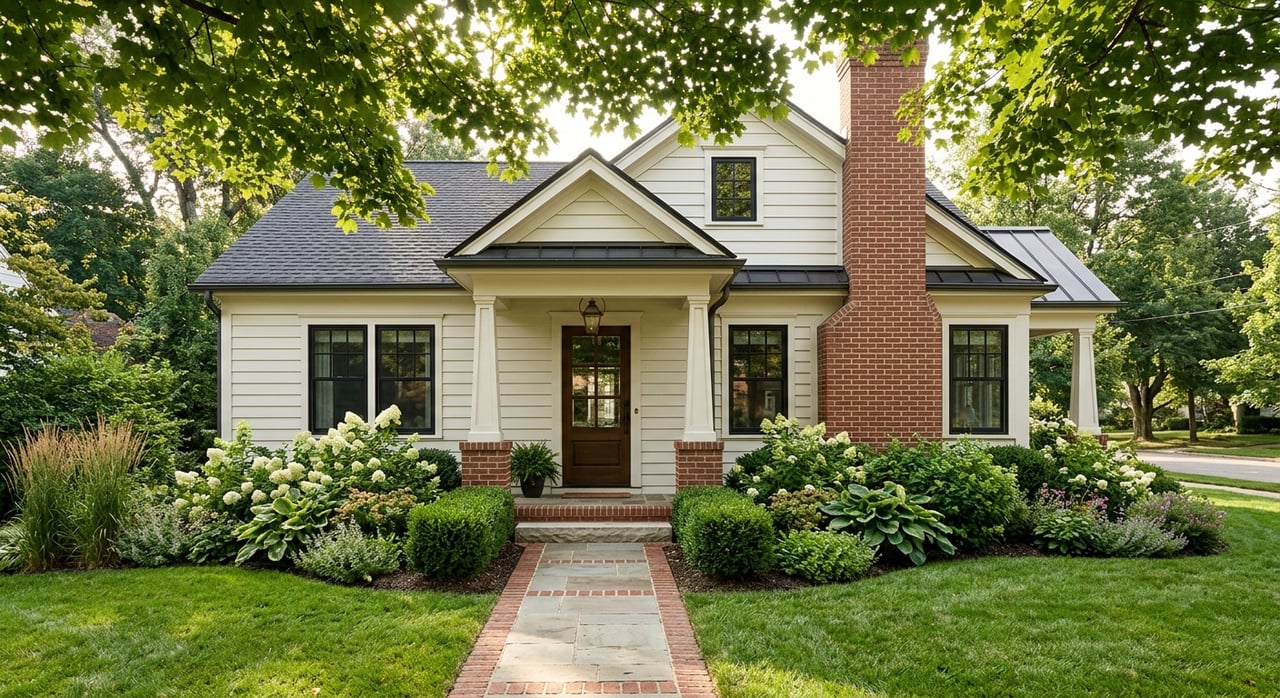
If you love character and walkability, the historic Village is often where your search begins. This is where Zionsville’s oldest residential fabric is concentrated, with development patterns dating from the 1850s through the 1930s.
The Village Core includes a broad mix of home styles. You may find cottages, Colonial Revival cottages, gable-front homes, Prairie or Four Square houses, Tudor Revival cottages, and postwar ranches.
What many buyers trade for here is not just the architecture. You are often choosing smaller or less uniform yards, older home layouts, and a close connection to Main Street, Village Corner, and nearby downtown parks.
For some buyers, that trade-off is exactly the point. If being able to enjoy the historic core on foot matters more than having a large yard or brand-new finishes, the Village offers a very distinct lifestyle within Zionsville.
Not every buyer wants a historic home, but many still want to stay close to town. Zionsville has several in-town or close-in neighborhoods that offer a single-family-home feel with easier access to shopping, parks, trails, and the Village area.
These neighborhoods can be a great middle ground. You may get more predictable lot layouts and newer construction than in the historic core, while still staying connected to daily amenities.
Village Walk is a covenanted neighborhood of 168 single-family homes located just north of Boone Village shopping near Ford Road and Oak Street. It works well for buyers who want a close-in location without being directly in the oldest part of town.
Thornhill is a long-established neighborhood with 194 uniquely designed homes. It is known for sizable lots, mature trees, and neighborhood amenities such as a pool and courts, and current subdivision data places average lot size around 0.56 acres.
For buyers comparing settings, Thornhill often stands out for its more established landscape. If you want room to spread out without moving to a large acreage property, this may be one of the more balanced options.
Vonterra is one of Zionsville’s newer subdivisions, with 103 single-family homes built in phases from 2017 to 2022. The neighborhood also notes direct access to more than 125 acres of parks, trails, and natural lands, plus a short walk to the historic Village.
That combination can appeal to buyers who want newer construction but still value proximity to the Village. It blends convenience, outdoor access, and a more recent build timeline.
If your priority is newer construction and neighborhood amenities, Zionsville has several communities worth comparing. These areas can be especially appealing if you want modern floor plans, neighborhood recreation, and a more subdivision-based lifestyle.
The town’s comprehensive plan points to major post-2000 growth in places such as Cobblestone Lakes, Holiday Farms, Hampshire, and Brookhaven. This is an important part of Zionsville’s housing story, especially for buyers who are less focused on historic character.
Royal Run is one of the largest neighborhoods in Zionsville, with 700 lots or homes built from 1997 to 2005. Neighborhood data notes features including a clubhouse, heated outdoor pool, tennis and basketball courts, playgrounds, and about 68 acres of greenspace.
For many buyers, Royal Run offers a classic neighborhood setting with built-in recreational features. It is often a strong fit if you want scale, community amenities, and homes from the late 1990s and early 2000s.
Holliday Farms is one of the clearest examples of luxury new construction in Zionsville. The town notes that it moved into the Urban Service District in 2024 while keeping private residential streets, and community materials describe golf, scenic trails, resort-style amenities, and private wooded homesites.
This is the kind of neighborhood buyers often compare when they want a newer luxury option with a lifestyle component. It is less about historic charm and more about newer homes, community amenities, and setting.
Zionsville also includes neighborhoods in the Rural district that feel more removed from the in-town core. These areas can be appealing if you want more separation between homes and a less suburban setting.
The town’s official subdivision classification list places neighborhoods such as Brookhaven, Cheval De Selle, Countrywood, Deer Ridge, Fox Run, Hunt Country Preserve, Lexington Hall, Old Hunt Club Road, Russell Lake, Shannon Springs, Stonegate, Timberwolf, and Woods at Huddersfield in the Rural district.
In some of these areas, lot sizes can be much larger than what you will find in close-in neighborhoods. Current subdivision analytics show examples such as Timberwolf at a 3.42-acre average lot size, Lexington Hall at 4.60 acres, St. Clair at 2.71 acres, and Old Hunt Club at 2.58 acres.
That is a very different experience from neighborhoods like Thornhill or the Village core. If privacy, land, or a more estate-style setting is high on your list, these pockets may deserve a closer look.
In rural-service areas, it is especially important to verify details before you buy. The town notes that these areas may involve drainage-permit requirements, and infrastructure details like public versus private streets and utility setup can vary by subdivision.
That means you do not want to assume all Zionsville neighborhoods function the same way. A home’s setting, road ownership, and service structure can influence both maintenance expectations and the feel of daily living.
Because Zionsville includes several very different neighborhood types, the easiest way to search is usually by micro-area rather than by the entire 46077 market. A focused comparison often saves time and helps you spot the right fit faster.
Think first about what kind of home feels right to you. If you are drawn to cottages and older architecture, the Village may be the best place to start.
If you prefer newer construction, neighborhoods like Vonterra, Holliday Farms, and Royal Run may line up better with your goals. This first filter can quickly simplify your search.
Lot size changes dramatically across Zionsville. The Village core tends to offer the smallest and most irregular lots, while places like Village Walk, Thornhill, and Vonterra provide more moderate suburban lots.
If you want acreage, neighborhoods such as Timberwolf, Lexington Hall, St. Clair, and Old Hunt Club show how far the lot-size spectrum can stretch. Your preferred yard size can eliminate many options right away.
Some buyers want to be close to Main Street, Village Corner, Lions Park, or the Big-4 Rail Trail. Others care more about trail access near Overley-Worman Park and Starkey Nature Park, or private neighborhood amenities like golf and club features.
This is where lifestyle becomes practical. The right home is not just about square footage. It is also about what you want to be near on a regular basis.
Once you have a short list, review the infrastructure layer. HOA rules, public versus private streets, and utility setup can vary from one subdivision to another.
Doing that homework early can help you avoid surprises. It also makes home tours more productive because you are comparing neighborhoods on the details that affect daily life.
One of the biggest reasons buyers are drawn to Zionsville is range. In one market, you can explore a historic Village cottage, a close-in single-family home, a newer neighborhood with amenities, or a rural property with acreage.
That variety is a strength, but it also means your search needs a plan. When you understand how the neighborhoods differ, you can spend less time scrolling through mismatched listings and more time focusing on the areas that truly fit your lifestyle.
If you are weighing Zionsville neighborhoods and want a calm, strategic way to compare options, Carly DeFazio can help you narrow the search and make sense of what each micro-area really offers.
Stay up to date on the latest real estate trends.
Real estate is more than a transaction-it’s a transition. I guide clients through buying and selling with calm leadership, proactive strategy, and a thoughtful, highly personalized approach. Every detail is considered, every move intentional, so you can feel confident not only in the outcome, but in the process itself.