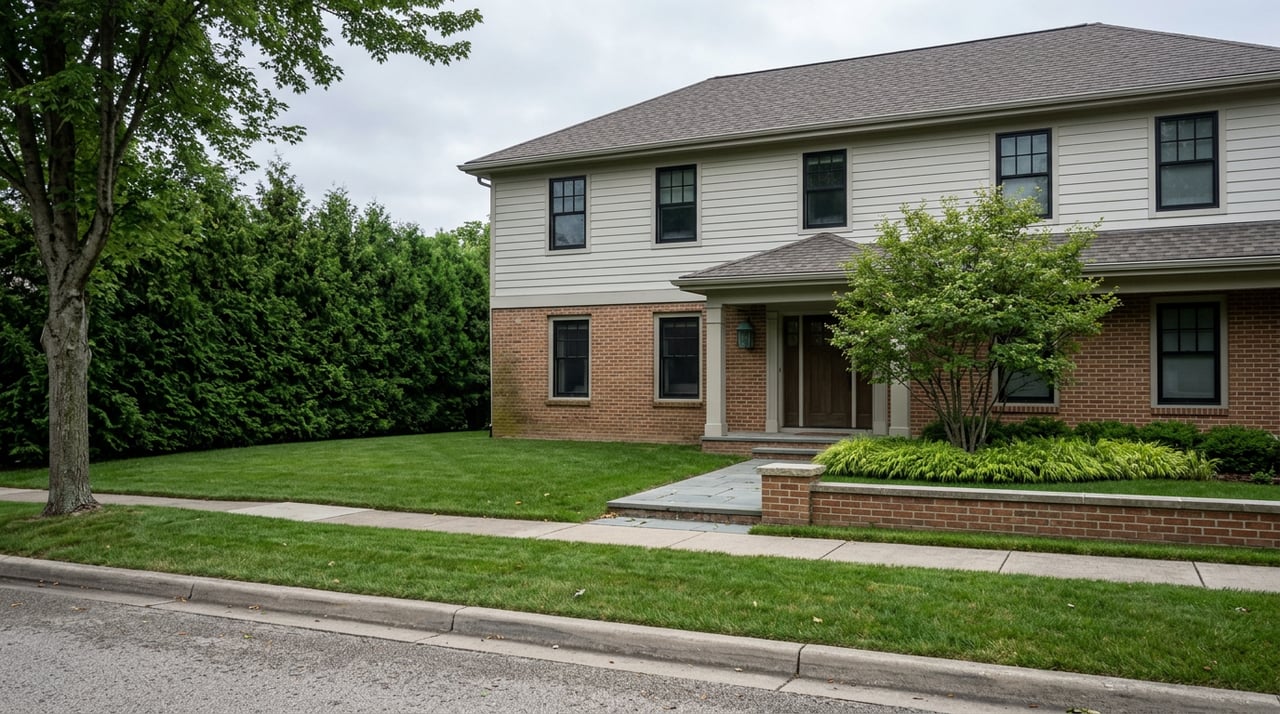
Things to Do in Westfield Indiana This Fall Across Two Hubs
September 3, 2026
September 3, 2026
Ask a longtime Westfield resident where they're headed on a Saturday night and eighteen months ago the answer was easy. Grand Junction Plaza, probably. Maybe a walk down Union Street first. There was only one place in town built for that kind of evening.
That stopped being true sometime between December 2025 and April 2026. In that stretch, downtown Westfield finished the restaurant lineup it had been building around the plaza for four years, and a second, entirely separate destination opened four acres off Grand Park Boulevard with its own restaurants, its own bars, and ten sand volleyball courts. Both are unmistakably Westfield. Neither is a walk from the other. If you live here, the question is no longer "where do we go tonight." It's which side of town your Saturdays actually run through, because for the first time, that's a real choice.
Grand Junction Plaza has been the anchor of downtown Westfield since it opened in 2021, a six-acre public space the city spent $39 million on before a single restaurant had signed a lease nearby. For years that bet looked lonely: a beautiful park, an ice rink in January, a farmers market in summer, and a thin ring of dining options a few blocks out.
That changed fast in 2026. BlackSheep Craft Pizza & Cocktails, the wood-fired pizza concept from Upland Brewing Company's restaurant arm, opened December 8, 2025 at 170 Jersey Street, right inside The Union at Grand Junction Plaza. Two months later, H Steakhouse opened February 7 at the southwest corner of Jersey and Mill, a 9,500-square-foot restaurant with more than 200 seats built by local restaurateur Henri Najem, whose sons also run Flamme Burger in Indianapolis and Savor in Carmel. Then in late April, Sun King Brewing opened its Westfield taproom at 133 S. Union Street, an 8,700-square-foot two-level building with a family-friendly taproom called Stacked House on the ground floor and a 21-and-over lounge, Upper House Social, upstairs, with a patio overlooking the plaza that seats 200 on its own.
Three openings, five months, all facing the same six acres of park. That's not a coincidence of timing. It's a sequence the city planned on purpose: build the park first in a city of more than 50,000 residents, then let the restaurants site themselves around a finished amenity instead of a parking lot. Add in the Westfield Farmers Market, which runs Thursdays from 5 to 8 p.m. through September 3 this year with more than 50 vendors including returning names like Almost Paradise Farm, Wild Loaf, and Tulip Tree Creamery, and downtown now has a genuine seven-day rhythm instead of a park with occasional events around it.
While that corridor was closing its loop, a completely different kind of gathering place was taking shape four miles north, next to Grand Park.
Westfield Collective opened on four acres at 750 E. 181st Street with a soft launch in March and a ribbon cutting in April, attended by Mayor Scott Willis and owner Mike Ewers. It isn't a restaurant with a patio view. It's six independent restaurant concepts under one roof, none of which have another location anywhere else, plus three bars, two self-pour walls pouring 30 rotating taps, a dedicated bourbon and tequila bar, an ice cream shop, and a 25-foot LED screen built for watch parties. The building wraps around ten sand volleyball courts, four indoor and six outdoor, run by iBeach, the Westfield-based operator that had been running a standalone volleyball facility on the same site since 2018 before Ewers folded it into the larger concept.
Ewers, who also runs a similar venue outside Cincinnati, built the whole thing around a specific complaint about how people spend time now.
"I feel like we just don't gather like we used to. When I was growing up, we knew our neighbors a lot better than we do now. People are so busy. Where is that place where people come together and gather?"
—Mike Ewers, as quoted by You Are Current
Whatever you think of that as a design philosophy, it produced something downtown Westfield doesn't have: a single building where you can eat dinner, watch a game on a screen the size of a highway billboard, and play a set of sand volleyball without leaving the parking lot. It sits close enough to Grand Park's 400 acres of fields that families already driving there for tournaments treat it as the after-game stop. It has nothing to do with Grand Junction Plaza, and it isn't trying to.
Here's the part that actually matters if you live in Westfield: these two places are not connected by anything you'd walk or bike casually. The Midland Trace Trail, which runs nearly four miles through Westfield with trailheads at Quaker Park and Grand Junction Plaza, ties the downtown corridor into the Monon Trail and the rest of the Hamilton County trail network. It does real work for anyone going from the plaza to Quaker Park or catching the Monon north toward Sheridan or south into Carmel. Its published route stops well short of the Grand Park district. Getting from Grand Junction Plaza to Westfield Collective still means getting in a car, the same way it would if the two were in different towns.
That's a bigger deal than it sounds. Westfield has spent years building a reputation as a walkable, trail-connected city, and downtown genuinely earns that description now. But the newest, most talked-about piece of it, the Grand Park district, was built for drive-up convenience next to a sports campus, not for foot traffic from downtown. The pickleball buildout tells the same story from a different angle: Freedom Trail Park is adding six new courts downtown, approved by the Parks and Recreation Board last November with completion targeted for this fall, giving the downtown side its own courts to go with the ones already at Quaker Park. Meanwhile The Picklr planned a separate 12-court indoor facility across from Grand Park itself. Same sport, same city, two separate builds serving two separate crowds.
Here's how the two sides actually compare right now:
| Downtown / Grand Junction Plaza | Grand Park / Westfield Collective | |
|---|---|---|
| Anchor | A finished $39 million public park | A four-acre eatertainment venue |
| Food | H Steakhouse, Sun King's Stacked House and Upper House Social, BlackSheep | Six independent restaurant concepts, none with another location |
| Weekly draw | Thursday farmers market through September 3 | Year-round volleyball leagues and open play |
| Getting between hubs | No casual walking or biking route between hubs | By car via Grand Park Boulevard, not trail-connected to downtown |
| What it's built for | An evening out, a reservation, a walk after dinner | A group hangout with something to do while you're there |
Neither circuit is better. They're built for different errands, and that's the part worth sitting with if you're already living here. A household that orbits Grand Park for youth sports is going to build its weekend around Westfield Collective almost by default, because it's already where the car is parked most Saturdays. A household that walks to the farmers market or catches Jams at the Junction on a summer evening is going to keep gravitating downtown, because that's the six acres they already know. Eighteen months ago that distinction didn't exist because there was only one place worth building a routine around. Now there are two, and which one becomes home base has less to do with which part of Westfield is "better" and more to do with which part of town you're already circling.
If you're weighing a move to Westfield, or you already live here and are deciding whether your next home should sit closer to one hub or the other, that's a conversation worth having before you fall in love with a floor plan. The two sides of this city are going to keep developing in different directions, and a five-minute drive to one doesn't mean much if the other is where your family actually spends its Saturdays.
If you want to talk through what that looks like for your specific situation, Carly DeFazio knows both sides of this city well enough to help you figure out which one fits. Let's Connect.
Stay up to date on the latest real estate trends.
Real estate is more than a transaction-it’s a transition. I guide clients through buying and selling with calm leadership, proactive strategy, and a thoughtful, highly personalized approach. Every detail is considered, every move intentional, so you can feel confident not only in the outcome, but in the process itself.